Reclaiming Safety for Children Whose Parents Use Substances
March 17, 2026

March 17, 2026
by Angela Burton
In this essay of upEND’s Reclaiming Safety series, Kassandra Frederique, Dinah Ortiz, and Mark challenge the family policing system’s assumptions that parental drug use automatically equals harm to a child—an assumption that collapses complexity into crisis and justifies surveillance and separation. Centering the lived realities of Dinah, a single mother parenting under the constant threat of child removal, and Mark, who navigated his father’s substance use amid financial instability and incarceration but was sustained by family and community care, the authors expose the gap between dominant narratives and families’ realities.
Through these stories, the authors call for new norms that center children’s and families’ actual conditions rather than fictional ideals of “good parenting” or “unexamined beliefs that all parental drug use causes harm.” They note that the most persistent threats to families with a substance-using parent stem from housing insecurity, economic precarity, strained relationships, and the absence of reliable material and social support. Yet “when drugs are in the mix, everything else about a family—their strengths, needs, and circumstances—disappears from view.”
The authors remind us that “real life is complex and that effective responses must be equally nuanced,” proposing concrete steps toward networks of care that hold families together, meet material needs, and prevent harm without surveillance or separation. Ultimately, they offer a simple but transformative precept: when intervening in the lives of children whose parents use drugs, state actors must “treat a family as a family.”
by Kassandra Frederique, Dinah Ortiz, and Mark Z.
In the United States, most believe that people who use substances, including those in chaotic use,1 should get help and not punishment.2 Fearless organizing and advocacy have shifted perceptions of many drugs, including cannabis, psychedelics, and some opioids and stimulants (though many in these classes of drugs, including the people who use them, remain highly stigmatized). Yet public support for treating substance use as a health issue does not necessarily translate into support for non-punitive responses. Many people endorse treatment only when it is mandatory, abstinence-based, or tied to surveillance and sanctions for relapse. In this sense, carceral logics remain deeply embedded even within so-called “health” approaches. Treatment is too often structured as coercion rather than care, and relapse is framed as moral failure rather than a predictable part of recovery. As such, when efforts are made to decriminalize substances or to discuss the abolition of punishment systems in the context of parental drug use, these efforts are met with skepticism. This skepticism blocks radical imagining, permits draconian drug war policies to continue decimating families, and most importantly, dehumanizes everyone involved.
Our culture has rigid norms around what it means to be a “good parent”—particularly when it involves mothers, and even more so for Black, Indigenous, and Latine families. These norms are rooted in notions of worthiness and deservedness and are influenced by racism and classism. Over centuries, our local, state, and federal governments — and the institutions and agencies [that partner with them] — have determined who has the right to form families through policies such as forced sterilization, family separation, and child removal. Parental drug use, particularly for women of color, falls outside of the norms of “good parenting.” Admitting to recreational or occasional drug use carries the risk of ostracization and punishment. With this admission can come deep shame, even when the drug use has not caused any harm.
Put simply, when drugs are in the mix, everything else about a family—their strengths, needs, and circumstances—disappears from view.
These enforced norms have created a landscape of risk, stigma, and fear of state involvement and family separation, making it challenging to even have conversations about safety and wellbeing. Imagine how hard it is to maintain an affirmative view of yourself as a mother — even if you know yourself to be a good mother — when every agency, policy, and cultural message is telling you otherwise. This powerful messaging is reproductive violence3 and a particularly potent form of oppression.
 It is important to note that the messaging not only targets parents but also family and community members, incentivizing them to participate in the stigmatization and isolation of parents who use drugs. Families are, understandably, concerned, but in the name of protection of the affected children and accountability for the parent, people sometimes engage in actions or responses that multiply harm for everyone involved.
By every measure, the “family policing system” (commonly referred to as the “child welfare system”) invests more in funneling children into prisons than into schools. Policies related to parental substance use are largely driven by myth instead of fact, and extensive racism (specifically anti-Blackness) undergirds these policies. Despite evidence of children and families experiencing immediate and long-term harm and poorer outcomes after family separation and state intervention, we continue to legitimize and fund the family policing system. Through punishing parents who use substances (as well as their families), the family policing system has become a collaborative arm of the war on drugs. In short, the family policing system is a series of policy choices that need undoing.
Family policing policies start with the assumption that the child of a parent who uses drugs requires forcible intervention, rather than the notion that children and families need support and nonjudgmental care. This ethos does not reflect the truth of many real people who assert that family policing intervention invites more damage than care. This essay attempts to reconstruct the narratives of families with a substance-using parent and center these lived experiences of family and state intervention. It attempts to construct new norms and values that center the wellbeing of children and whole families in their realities instead of our fictional beliefs of “good parenting” and unexamined beliefs that all parental drug use causes harm. This process requires evaluating these policies and asking if they are truly moving us towards the goals of wholeness, wellbeing, and safety — and, if not, aggressively changing the practices that are setting us farther from this vision.
The stories in this essay highlight the harms that the family policing system failed to address and dispel the myth of the system as savior. These stories are not fantasies; these are the realities of family resilience. Between the two families featured, the most consistent truth is that everyone had a deep love and desire to care for children as best as possible. How that happened was often impacted and constrained by systemic factors of state involvement, stigma and judgment, poverty, and the lack of support for people who use drugs. Often, stories about substance use, parenting, and the family policing system are positioned as acute moments of harm, attributed primarily to drug use. We aim to disrupt that, and instead offer a layered view of their experiences before, during, and long after intervention from the family policing system.
Throughout this essay, we aim to center families’ own stories of harm, survival, and healing. We hear from two people who share their stories of substance use and parenting:
In sharing these stories, several realities associated with family policing system involvement emerged:
Policies often require or encourage service providers to use the presence of illicit substances as a proxy for the presence of actual abuse or neglect and acute experiences of harm against children. As a Movement for Family Power report describes, “much of the literature claiming associations between drug use and child maltreatment suffers from circular logic: the literature determines child maltreatment has occurred if a CPS caseworker says it has occurred, and a CPS caseworker determines child maltreatment has occurred if they find evidence of substance use.”4 This narrative around parental drug use assumes harm to a child, that the harm experienced is acute, that it is the result of a parent’s substance use or chaotic patterns of use, and that the acute harm comes from a child’s interactions with a parent who is using illicit substances.
This false narrative, where parents can never control their use and therefore cannot control their actions around children, invites family policing staff to intervene in what they presume to be a dangerous, tumultuous situation. In describing her first experience with family policing, Dinah described agents immediately replicating experiences with law enforcement, saying how the “conversation went from zero to 100 really, really fast… they’re introducing themselves one minute, and the next minute they’re threatening to remove my children.”
Dinah described this experience as one where CPS workers came with their own biases about her situation and immediately enforced a power differential over her. In her view, the family policing system was “empowering one side of human beings to then have power over the other side, that they perceive [to be] wrong or bad or evil.” In this dynamic, CPS workers see families as places of harm and intervene accordingly. The first shift must be to approach families, not with answers and interventions, but with curiosity and a desire to understand the family’s needs.
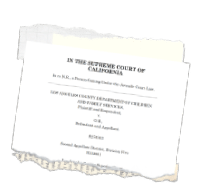
When a 17-month-old boy was taken from his father following a positive drug test, social workers and organizers filed an amicus brief and the California Supreme Court ruled that substance use alone is insufficient to warrant family separation.
Before this groundbreaking decision in 2023, California operated under a “tender years doctrine” that suggested when a child is under the age of 6, any evidence of substance use is evidence of an inability to care for a child.5
For many families, substance use is not the primary source of instability. Rather, the most pressing and persistent harms stem from poverty—housing insecurity, economic precarity, strained relationships, and the absence of reliable material and social support. For both families featured in this essay, those looking from the outside pointed to substance use as the main source of harm and an issue to “fix.” But they failed to address the day-to-day well-being of the children in the family, which was compromised by issues other than substance use. Even in situations where illicit substances were present, the problems described were never completely encapsulated by substance use. In short, the drugs were not the primary drivers of harm.
For Dinah’s family, chaos came from a lack of financial stability, not her use of substances. As Dinah described, “Chaotic is when you are struggling, trying to find housing, trying to find employment, trying to find, you know, some type of way to censor yourself while raising children.” As a single parent to three small children, Dinah lacked structural or familial support to maintain employment, creating a cycle of instability. “It was like this catch-22,” she said, “I could work. But then I didn’t have no way to watch my kids, and if I stayed home, then I had no money for my kids to keep a roof over their heads.”
 Despite clear resource needs, both the family policing system and her extended family were insistent that substance use was the main issue and responded in ways that centered on shame and punishment instead of the economic support she needed. In those moments of need, Dinah articulated several interventions that could have been meaningful, including community-based resources for familial support, a living-wage job that offered options for childcare, and resources for her family to better understand how shame and punishment are ineffective, harmful approaches to substance use. Providing these resources shouldn’t require state intervention, but too often for parents who use substances, receiving support is predicated on policing and surveillance.
Unlike Dinah’s experience, Mark’s relationship with his family was not characterized by forced intervention from the family policing system. Rather, a network of relatives found different ways to support his father and their relationship, including through periods of his father’s instability and substance use. They provided stability for Mark and opportunities for his father to engage with them when it was possible.
Mark’s father engaged in substance use throughout the majority of his life, contributing to economic and housing instability, incarceration, and, later in life, unstable and unpredictable behavior. Eventually, Mark’s mother separated from his father and took Mark to live with a family member, creating a necessary separation to avoid being affected by his father’s instability. But this did not erase the familial bonds, and his mother and other relatives provided opportunities to maintain the relationship.
As Mark described, “In addition to my mother, my paternal grandparents and father’s siblings offered various levels of support. They provided meeting places, picked me up for family outings, and at times, supported my father financially.” Times of stability for Mark were not encapsulated by the times where his father was sober, but instead by periods where his father was resourced with a job and housing, which corresponded with periods of sobriety or managed substance use.
Despite the instability of his father’s life, familial and community support offered a safety net for Mark to have the necessary space from his father but enough connection to where the relationship could be preserved. Whereas Dinah felt isolation and judgment from her family and punishment from the family policing system, Mark found support that centered on his well-being, including maintaining the relationship with his father.
The family policing system is not equipped to address the underlying needs of families or provide the kind of support that Mark experienced. As Movement for Family Power insightfully summarizes, “Studies show that increases in income and the minimum wage, access to childcare, expanding Medicaid, and providing housing all correlate with decreases in what the foster system defines as ‘child maltreatment.’”6 However, the structure of child welfare funding continues to prioritize out-of-home placement over meeting families’ basic needs. The majority of federal and state dollars are tied to foster care and system administration, while states have limited mechanisms to provide families with direct material support such as cash assistance, housing, or childcare. This imbalance persists despite clear evidence that concrete economic supports—not surveillance or separation—are what most effectively reduce harm. Families in need are left with few resources to address their concerns, while facing a system intent on punitive responses.
For Dinah and many other parents, the threat or realization of family separation is a primary source of trauma. Mark similarly named his father’s inconsistent presence overall as a source of pain. While Mark mentions that there were negative impacts of his father’s substance use, he also describes that he “felt a lot of stress when we were separated. I didn’t know where he was. I didn’t know if he was okay.” Mark’s mother and extended family supported their relationship through logistical and emotional care, including during moments of his father’s instability or incarceration. Even with these efforts, the relationship remained challenging, but the pain described was not one of acute harm but the disappointment of an unstable parental presence.
In both of these families, parents and children shared the same goals and desires: to maintain a healthier relationship. The family policing system, on the other hand, approaches families as broken, in need of intervention, and in many cases, requiring separation. Dinah and Mark expressed desire for the state to identify and support the aligned goals of parents and children. Essentially, they want the state to treat a family as a family.
Shame, whether external or internalized, shaped Dinah and Mark’s experiences. Dinah expressed shame as a defining experience of her interactions with family members: “It was family members putting me down…talking about me in front of [my kids].” In addition to wanting more familial support, Dinah also noted the importance of those family members receiving education around substance use and how they could better support her and her children.
Systemic-level stigma also had a significant impact on the ability to seek care and treatment. As Mark observed, his father’s substance use was treated as a failure, not as a medical issue requiring treatment and support. Mark advocated for narrative change on substance use, especially parental substance use and supporting loved ones who use drugs. In addition to contributing to Mark’s father’s absence, criminalization compounded the shame for both Mark and his father when visiting during periods of incarceration. Had there been a way for his father to find support for both his substance use and his parenting, he may have been able to stay more present for Mark.
Mark and Dinah also discussed the impact of internalizing shame, noting how this altered their perceptions of their experiences and their ability to seek help. Mark described that, even as a young person, shame isolated him, even from friends who were going through similar situations: “A huge proportion of people I dealt with and knew had similar situations with [their] parents. So, looking back, I definitely had people I could have talked to, but I felt like I couldn’t talk about things, and I kept a lot to myself.”
 Dinah described a similar isolation, noting that when she looked back at a family shelter they had stayed in, all but ten families had an open family policing case — but no one was sharing their experiences. Mark also identified how shame contributed to his father’s absence: “I definitely understand, as a father, not wanting your children to see you incarcerated or talking to your father behind glass…There can be some shame and a want to preserve the memory [that] your child has of you in the good times.”
Shame around substance use and system involvement leads to emotional and psychological isolation for both children and parents, which cuts off the ability to find support and understanding, compounding the trauma already being experienced. To help address the feelings of shame and isolation, Dinah recommended a parent-advocate model, where individuals who have previously received services are trained to provide support to parents navigating similar experiences. She noted that parent-advocates were most successful when they came from community-care models instead of through state systems. Mark also desired community support, where he could have talked about his experiences with peers in a supportive, safe environment to escape his emotional isolation.
MOVING FROM SURVEILLANCE TO SUPPORT
 1. Support the Needs of Parents and Advocate for the Whole Family
 2. Address the Material, Everyday Circumstances of Families to Create Meaningful, Sustained Support and Change
 3. Create Community and Kin-Based Care Networks
Kassandra Frederique is the executive director of the Drug Policy Alliance, a national nonprofit that works to end the war on drugs—which has disproportionately harmed Black, Latinx, Indigenous, immigrant, and LGBTQ communities—and build alternatives grounded in science, compassion, health, and human rights. During her time at DPA, Frederique has built and led innovative campaigns around policing, the overdose crisis, and marijuana legalization—each with a consistent racial justice focus. Her advocacy, and all of the Drug Policy Alliance’s work, lies at the intersection of health, equity, autonomy, and justice.
Throughout her work, Frederique has been a powerful advocate for working closely with people who have been directly impacted by the war on drugs, and she has built strong alliances with partners in New York and beyond. She has been instrumental in grounding the national drug policy conversation around reparative justice and restitution for communities harmed by the war on drugs. Additionally, Frederique is actively working with the In Our Names Network and other efforts across the country to resist drug war-fueled state violence.
A New Yorker, Frederique holds a M.S. in Social Work from Columbia University and a B.S. in Industrial Labor Relations at Cornell University.
Dinah Ortiz has been working on behalf of people who use drugs and pregnant and parenting people for over two decades. She has spent much of that time at a Well renowned holistic public defense organization as a parent advocate, supervisor, trainer for incoming Attorneys pre bar, Social workers and as an internal thought leader on harm reduction. She serves as a board member for the North Carolina Survivors Union (NCSU) and is a current member of the leadership team for the National Survivors’ Union (NSU). She has sat on advisory boards for work supporting federal rural overdose response grantees, and currently for the Albert Einstein College of Medicine IMPOWR-me project as a board member. Coming out of direct parent representation for over a decade Dinah slowly came to understand there was something missing in the representation of marginalized parents who use drugs (our voice.) She has appeared on hundreds of panels globally sharing the challenges created by the child regulation system and its disproportionate targeting of marginalized communities and communities of color. She helped adapt and develop a storytelling model for people who use drugs—helping people work through their own experiences so there is space for reflection where stigma has been internalized, as well as equipping people to share their stories to disrupt larger narratives.
Mark Z. navigated his father’s substance use, financial instability, and incarceration as a child. Now he advocates for narrative change and support for loved ones who use drugs.
Frederique, K., Ortix, D., Z., M. (2026). Reclaiming Safety for Children Whose Parents Use Substances. upEND Movement. upendmovement.org/safety