Reclaiming Safety for For Children Who Experience Physical Violence
October 14, 2026

October 14, 2026
upEND’s Reclaiming Safety series addresses the “elephant in the room” about family policing abolition—questions about what happens to children when we stop relying on carceral systems and practices to prevent or address harm. Thinking critically about responses to harm that allow children to both be safe and remain in their communities is important for abolitionists. As a framework, abolition understands that policing cannot prevent harm. And, when we use policing to respond to harm, policing often compounds harm and trauma instead of alleviating it. Thus, abolition is necessarily concerned with ending punishment systems and practices. At the same time, abolition asks that we build structures and new ways of being that transform societal conditions and our relationships with each other. In other words, we must consider which systems produce harm and therefore must be undone while also considering how the larger structures of domination —racism, anti-Blackness, cisheteropatriarchy, ableism, and racial capitalism—can be undone to end violence.
Yet, often missing from the list of what must be undone to build an abolitionist future is adultism. Adultism names the structural oppression children face by virtue of being not yet adults. Adultism is also embedded within systems. The family policing system, though it purports to protect children from harm, uses adultist logic that ultimately further harms children and creates systems of dominance against children through the state. If we truly want children to be safe, we must end policing and transform our relationships with children. This essay offers a framework for understanding adultism and argues that ending adultism is too an abolitionist project.
Adultism provides language to name how children experience structural harm, often at the hands of adults. It is a system of oppression that infiltrates relationships between children and adults, similar to how sexism, racism, and classism often shape our relationships with one another.1 Conversations about “bad” parents tend to dominate our understanding of harm against children to center individual caregivers who are deemed unfit, often by the family policing system. But naming adultism moves past individual blame and provides structural understandings to how children experience harm both within systems—-from schools to foster care—-and in homes.
Adultism shapes how we understand who children are, what they know, how much power we believe they should hold, and how much respect we feel they should be given. Children are frequently seen as existing in a lesser state of being, valued mostly for the adult a child will become. Childhood then becomes a waiting period for adulthood. Afterall, we ask children what they want to be when they grow up, not who they want to be now and how we support them in doing so. Children’s knowledge of their own lives and emotions are often treated as unknowable and as unreliable, and their perspectives are easily dismissed or rarely sought at all.2 We tell children their feelings are just a phase or talk about them as if they are not in the room. And because children are dependent upon adults, adults come to see exercising power over them as a right, something done for a child’s own good.2 Children are forced to accept treatment that most adults would not simply because they are children. This logic of control and domination in the name of care is essential for understanding how adultism functions both within families and systems that claim to protect children.
It is also deeply important to understand how adultism is intertwined with anti-Blackness and legacies of chattel slavery and colonialism. Enslaved people were seen as existing in a perpetual state of childhood and in turn were denied the rights and privileges of those who have been granted the status of adults.3 Under anti-Black logics, Blackness is seen as child-like and thus deviant. These perceptions were used to justify violence and punishment through physical harm, surveillance, and control. Scholar Toby Rollo has shown how the binary between the child and the fully human adult helped produce anti-Black racism.4 Rollo argues that Black people have been situated as objects of violence because of Blackness’ association with childhood. Childhood is thus constructed in a state of “naturalized violence and servitude.”4 Importantly, white power structures also shape our ideas about Black children. Stacey Patton’s work on physical discipline creates throughlines between slavery, racism, and physical discipline of Black children.5 Violence through the form of physical discipline is often seen as protection from even greater violence in an anti-Black world. These histories show how adultism and negative perceptions of childhood are braided together with anti-Blackness.

“There’s some days that I’ll shield him in the house just so he won’t go outside and I know that I can’t do that for the rest of my life.”
Adultism normalizes harm against children, and physical punishment is one of the clearest examples. Adults do not expect to be hit by their coworkers, family, friends, or otherwise when they make mistakes or become emotionally dysregulated. When they are, we have words and understandings for it: assault, elder abuse, interpersonal violence, and so on. But what happens when a child is physically disciplined?
A child in Little Rock, Arkansas got in trouble in school. The school called his parents and gave them two options: the child could be suspended for three days or paddled. Unable to take the time off work for the suspension, the parents agreed to have their child paddled. After the incident the child was afraid to go to school. Despite wide agreement that physical punishment is harmful to children, corporal punishment in schools is legal in 15 states. Physical punishment is a normal part of many children’s lives, but the adultist logic that supports adults exerting physical dominance over their children is in part the same logic that leads to severe cases of abuse against children. In other words, adultism provides cultural and psychological frameworks that normalize child maltreatment, similar to the ways that patriarchy and misogyny produce cultural ideas about women that lead to gender-based violence.6
Harm against children happens in homes, where one-third of parents report spanking their children at least once a week, and as the example above illustrates, within systems. Many opponents of abolition focus on the harm that occurs to children in homes, but using adultism as a framework of analysis also reveals how the family policing system is built with adultist logics that harm children even as it claims to protect them. The family policing system is built on the doctrine of parens patriae, or the parent of the country. This is the legal basis for the state’s ability to separate children from their families. Instead of actually protecting children from harm, the state assumes dominance over children as its new parent. The adultist logic of dominance over children is seen in the system’s foundations and current practices.
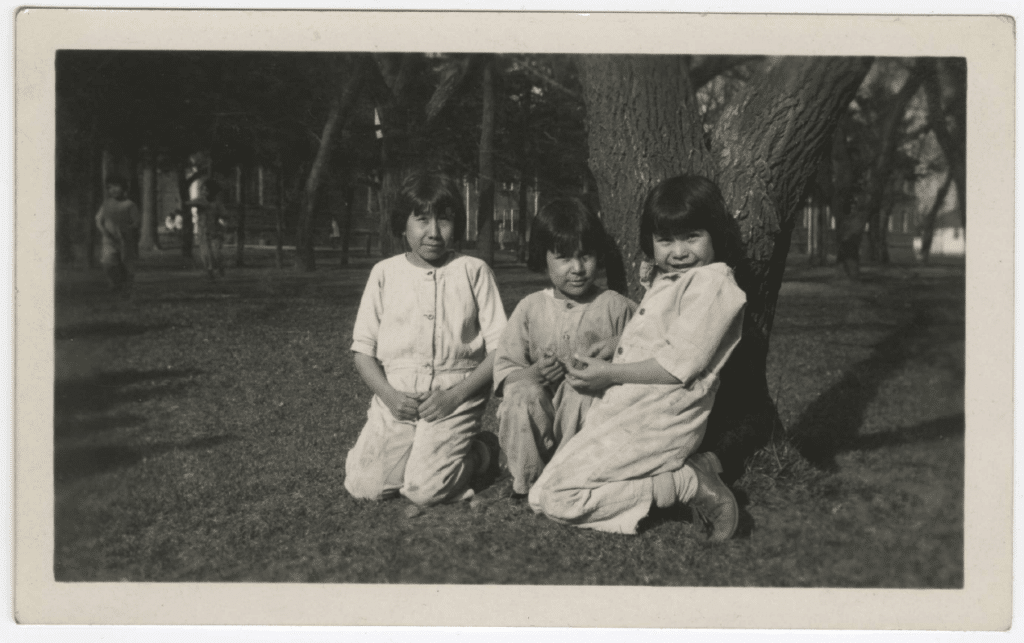
Photo of children at Pipestone Indian School, courtesy of the National Indian Boarding School Digital Archive.
Indian Boarding Schools, one of the earliest formations of the family policing system, for example, separated Indigenous children from their homes and communities for the purpose of assimilation into white dominant culture. This logic cannot be disentangled of colonial views about Indigenous communities as childlike, in need of molding or “raising up” and therefore also subject to violence. Separating children from their communities and cultures was already traumatic and harmful, and at these schools, children faced extreme physical violence, even as the system claimed to save them.
Today, Black and Native children are disproportionately separated from their families in comparison to their white peers. Separation does not center the well-being of children, instead the state acting as the “parent” asserts domination over children: it is documented that family separation creates harm and trauma. Children also have little say in these decisions, from whether they are removed, to where they are placed, and when they can see their families again. These decisions are made by adults—caseworkers and judges—in their ”best interests,” while ignoring their perspectives and autonomy. Separation reflects the state acting as the final parent, asserting domination over children simply because they are children at the expense of their well-being. The state also disproportionately places Black children in foster care in harsher conditions, such as congregate care, where they are subject to harsher surveillance and control. This is deeply intertwined with the ways that adultism and anti-Blackness collide, creating conditions for violence against Black children.3 Because the family policing system is built on the same adultist logics of domination that harm children in the first place, it cannot truly protect children. The system’s practices are rooted in domination and control in the name of care.
Carceral systems built on the same systems of dominance and control cannot prevent harm against children nor can they respond in ways that produce healing and safety. Abolition instructs us to turn to root causes of the violence we face in society as a starting point to ending it. Adultism in all its forms is the starting point we must take seriously to truly prevent harm against children. Importantly, abolition provides a framework that allows us to see adultism clearly; family policing cannot do this. I bring up adultism not because I believe that adults harm children and therefore we need carceral systems to save children. Understanding adultism is an important part of building a new way of being because it asks that we fundamentally transform our relationships with children. Children need adults but this does not mean adults should exert control and force over them. Abolition instead asks us to consider how to be in community with children. It asks us to consider how we end all forms of harm, even ones that are so normalized that they are hard to see.
Reclaiming Safety explores the hard questions about abolition that we often struggle to answer. In particular, the series asks, what do we do when physical abuse happens? This essay offers a perspective that if taken seriously can help prevent physical abuse in the first place. If we change our relationships with children, I believe we get much closer to a world where children are safe, valued, and cared for. This is not an essay about bad parents; adultism corrupts all of our relationships with children by asserting our right to dominance. I write this essay as a call-in to other adults who want to build a more liberated world. Abolition is constantly calling on us to kill the cop in our minds; ending adultism is part of that work. In preventing harm against children, understanding adultism creates space to center children’s perspectives on responses to harm, create more spaces for children’s voices in movements, and support parents to unlearn inherited behaviors that result in harm. When harm does occur, an analysis of adultism can help ensure that children have a say in what happens to them. We must constantly transform the world around us to end policing in all forms. For adults, that means fighting against the systems of domination that harm children and letting go of the idea that children are ours to control.
 When a parent physically harms a child, the state’s response is predictable: a mandatory reporter makes a call, a caseworker opens an investigation, and family separation becomes a real possibility, often the default. The child protection system and the larger family policing system has positioned itself as the primary answer to physical abuse within families, the entity authorized to intervene when a household becomes unsafe. But for the families most frequently subject to that system, safety has never reliably been what it delivers. This essay takes up the question at the center of a different framework: what does safety actually look like in instances of physical abuse, when a parent harms a child, if the answer is not family separation?
To raise this question is not to minimize the reality of harm. Physical abuse causes lasting damage to children’s behavioral, cognitive, emotional, social, and biological functioning.7 The stakes are serious and real. But the evidence also compels a reckoning with what removal itself does to children, and with what survivors say they actually needed. This essay argues that safety from physical abuse can be built through frameworks that center child agency, address structural harm, and create meaningful community accountability, without severing the family bonds that children themselves often desperately want to preserve.
The most essential starting point for reimagining safety is to ask children what they want. Research consistently shows that children involved in child protection processes are rarely meaningfully consulted about decisions that determine the course of their lives. Wilson et al., in a systematic synthesis of 39 qualitative studies of children’s experiences with Child Protection Services (CPS), found that children frequently reported not being listened to, not being asked for their opinions, and that adult perspectives were systematically prioritized over their own. Children described the investigation process as frightening and invasive, characterized by pressure from strangers who treated them as evidence sources rather than as people. As one child summarized: “The lady who came asked me a lot of questions. She put me under pressure.”8
Crucially, the most consistent fear children articulated was not of their parents. It was of being removed from their home and family.8 Even children who understood that they were experiencing harm at home expressed love and loyalty toward their families, and terror at the prospect of being taken away. This is not naivety or denial. It is testimony about what children value, and it demands to be treated as meaningful data. Children’s deepest fear of removal is not an obstacle to child protection; it is a signal about where genuine protection must begin.
This pattern holds among physical abuse survivors as well. Adolescents interviewed by Kashyap et al., all residents of childcare homes who had experienced physical abuse, domestic violence, and neglect, articulated their needs not as separation from their families but as emotional support, positive relationships, peer connection, and nonjudgmental understanding. They named what they needed: someone to listen, adults who accepted them, and people who engaged without shame or judgment.7 Across types and contexts of harm, survivors consistently say the same thing: they wanted someone in their corner, not someone with the authority to dismantle their world. Safety, from the perspective of these survivors, was fundamentally relational, not institutional.
An honest accounting of child safety must confront what removal actually does. Wilson et al. document in striking detail the trauma children associate with out-of-home placement. They were taken without warning, without explanation, without dignity: “They just came suddenly. The police came. Took me, my [siblings], then went away.”Younger children felt kidnapped. Most did not know where they were going, what foster care meant, or when or whether they would return home.8
Once in care, children lost their communities, their schools, their siblings, and their sense of self. Institutional settings routinely exposed them to peer-to-peer violence, bullying, and exploitation, in some cases worse than what they had experienced at home. Children emerged stigmatized, labeled “bad” or “problematic” by the system that claimed to protect them, and they internalized those labels over time. As one child reflected about professionals in her life: “They assumed I was doing drugs… even if it comes out negative, you are still making them feel like you are assuming they are a bad kid.”8
Understanding what produces physical abuse in family settings is essential to building alternatives that can stop it. Kashyap et al. document directly how participants linked violence to resource depletion: alcohol use fueled by financial despair, caregivers overwhelmed without support, households destabilized by poverty and isolation. One participant described how her father’s substance use and financial instability created a household in constant crisis, money gone, meals skipped, children struck, more money spent on medical care.7 The violence was not separate from poverty—it was inseparable from it.
This structural context does not excuse harm. It locates where intervention can be most effective. The same research that documents abuse consistently finds that direct cash assistance, housing stability, childcare access, and reduced caregiver burden correspond with decreases in what the family policing system defines as child maltreatment. Physical abuse does not happen in a vacuum, and households depleted of resources and cut off from support create an environment for such violence to propagate. Although the family policing system purports to make children safer, it never touches the economic conditions that harbor violence. Thus it is doomed to—or designed to—reproduce those harms in the same families across generations, misidentifying structural abandonment as individual moral failure. Addressing poverty is child protection.
 What Should Happen Instead: A Walk Through
The most important question in this essay is the most practical one. When a parent harms their child in a world without family policing, what intervention should occur?
First, let’s discuss entry points. People who first identify harm (neighbors, extended family, community health workers, and children themselves) must be trained and resourced to activate care instead of calling a hotline. Without family policing, these community roles are still crucial to harm prevention and intervention, but change course toward support and relationship, not surveillance and investigation. This routing requires infrastructure, training, resources, and clear protocols, built before a crisis arrives, not only during one.
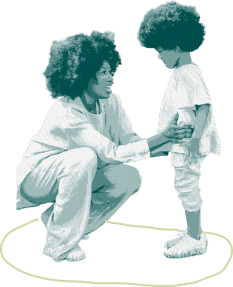
Intervention should begin by prioritizing child autonomy. Before any other action is taken, create a safe, unhurried, private space to hear what the child wants and needs. Not an investigative interview designed to build a case, but a genuine conversation: Are you safe right now? Who do you trust? What do you want to happen? What are you afraid of? Children have real answers to these questions when the conditions allow them to speak honestly without fear that their words will trigger consequences they cannot control. Centering children’s voices, even young children’s, is both clinically sound and an ethical obligation. Having the child in the driver’s seat, as much as developmentally and feasibly possible, is key.
If immediate safety requires separation, the question is who leaves, not who gets removed. A child who needs distance from the person who harmed them does not need to lose their home, their school, their siblings, or their community. Temporary relocation to a trusted relative, neighbor, or community member, someone the child already knows and feels safe with, preserves relational continuity while creating physical distance. The person who caused harm leaving the household, with community support to hold that boundary, is a fundamentally different intervention from placing a child in an institution or in a stranger’s home. This requires knowing in advance who the people in a child’s care network are, who can show up in a crisis, where the child might stay, and who will make and hold boundaries. This mapping is a crucial step before and during a crisis.
Accountability for the person who caused harm must be part of any reasonable response. And real accountability does not require punishment. Transformative justice frameworks, centered on the relationships between harmed and harming parties, facilitated by trained community members and oriented toward behavioral change rather than exile, offer a different account of how harm actually stops. Most survivors of abuse by someone close to them want transformation and accountability in that relationship, not suffering and punishment. People are relational creatures, and that relational need does not disappear because harm occurred. Mike Milton, founder of Freedom Community Center in St. Louis, describes the aim of accountability as creating “conditions so that we can make sure that they never do this again and they’re all able to move forward.” That is the aim: not punishment, but genuine change.
But what happens when the person who caused harm refuses to engage or when harm continues despite accountability efforts? Transformative justice practitioners are direct about this: if someone refuses to participate or harm persists, the community’s obligation shifts to enforcing safety by other means, restricting the person’s access to the child, requiring them to leave the household, or escalating the response as the situation demands. The distinction from the current system is not the absence of consequences. It is who determines those consequences, how, and toward what end: safety and genuine change, not punishment as a reflexive default.
Ongoing support for the whole family is needed to sustain the efforts of short-term interventions. Wilson et al. (2020) found that what children valued most, what actually improved their wellbeing, was not material provision, but the presence of consistent, trustworthy adults who believed them, kept their commitments, and stayed engaged over time.8 The infrastructure that allows children to survive harm is the same infrastructure that, built in advance, reduces the likelihood of harm in the first place.
No honest essay on this subject can look away from the most extreme instances of harm to children. There are situations of acute, escalating, life-threatening violence in which a child cannot safely remain in their home, in which no relatives are available or themselves safe, and in which community accountability infrastructure does not yet exist. These situations are real and demand serious consideration.
For severe cases in which a child genuinely needs to leave their home, the question is not whether that should happen but how it should happen. Community-initiated relocation, in which trusted adults in a child’s network facilitate temporary placement with a known and safe person, is categorically different from placement in the foster system. The former keeps the child embedded in their relationships. The latter strips those relationships away. When a child must leave their home, keeping them within their community, having their voice centered, prioritizing kinship placements, and working toward reunion, when possible, is how real safety is created. This is the difference between a compassionate crisis response and a carceral system that compounds harm.
Abolition of the family policing system does not mean that a child should never leave a dangerous home. It means that even in severe cases of harm, relocating a child away from their home and community should be a rare, last resort, pursued only when all other options have been exhausted, guided by the child’s own voice, and oriented toward reunion from the start. The current system deploys its most coercive responses most heavily in Black, Indigenous, and low-income communities, communities where poverty and systemic disinvestment are routinely misidentified as neglect and harm. Community-informed responses that do not replicate those surveillance logics are essential to any viable alternative.
The truth is, we are building something that does not yet exist. The trained facilitators, mutual aid networks, crisis teams, and care networks are being built in neighborhoods and organizations across the country, but they are not yet everywhere. The existence of severe cases does not justify a system that responds to every case with cruel tactics that exacerbate trauma and create barriers to healing.
 Conclusion
Children who experience physical abuse within their families do not need to be separated from those families to be safe, though in some cases they may need distance, different living arrangements, or short-term crisis support, ideally of their own choosing and within their own communities. What they need, above all, is to be believed, to be listened to, to have the structural stressors on their families addressed, and to be surrounded by adults who take their voices and their safety seriously.
Safety is not a surveillance system. It is a set of relationships, resources, and practices that allow families and communities to hold one another accountable, and to heal together. That is what reclaiming safety, in cases of physical abuse, actually looks like.
Zaira Campos is a writer, organizer, and host of Adoptees Crossing Lines, a podcast that challenges dominant narratives about adoption, foster care, and the family policing system.
As a Black same-race adopted person who also experienced foster care, Zaira brings lived experience and a critical perspective to conversations about child welfare and the systems that disproportionately harm marginalized communities. Her work centers the voices of those most impacted, challenges the idea that family separation is synonymous with safety, and advocates for approaches rooted in family preservation, community care, and accountability.
Through writing, organizing, and storytelling, Zaira works to challenge the systems that separate families and push for a future where children are heard, families have the resources they need, and safety is built through care rather than punishment.
Maya Pendleton has been a part of the upEND movement since its inception. She currently works as researcher and writer for the upEND movement, focusing on how we abolish the family policing system, the harms of the current system to children, families and communities, and the world we will build post family policing.
Campos, Zaira, Pendleton, M. (2026). Reclaiming Safety for Children Who Experience Physical Violence. upEND Movement. upendmovement.org/safety