
← The upEND Podcast
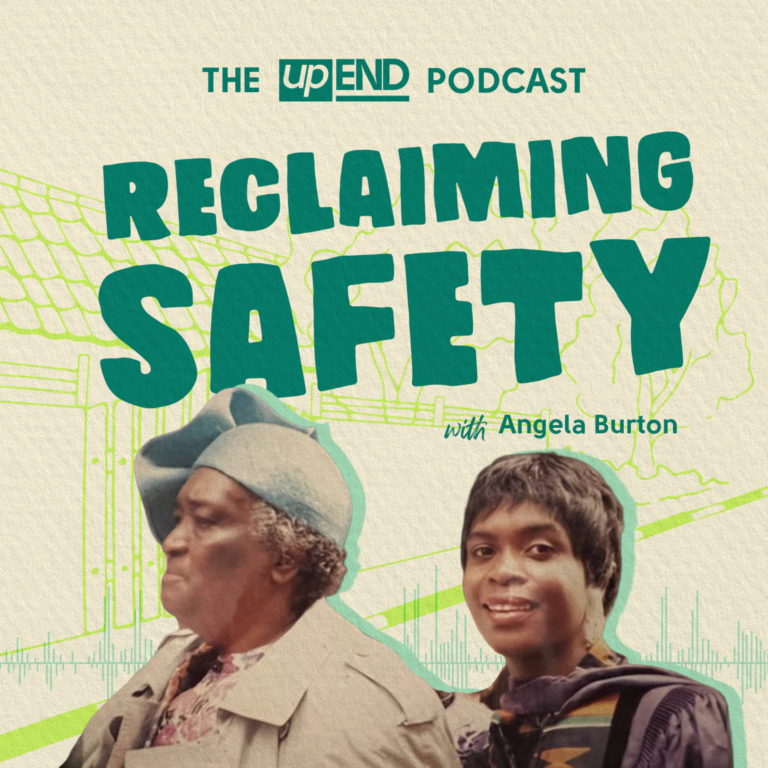
Reclaiming Safety (with Angela Burton)
Season 3, Episode 1

We can build a society where children and families are strengthened and supported, not surveilled and separated. The upEND Podcast illustrates that the “child welfare” system is beyond reform and needs to be abolished. The only solution to ending the harm of what we name the family policing system is a fundamental reimagining of the way society cares for children and families.
Welcome to Season 3 of The upEND Podcast where we’ll be answering all of your burning questions about family policing abolition!
If we get rid of the child welfare system, what will happen when children are harmed? Are abolitionists saying that child abuse is okay?
Reclaiming Safety is upEND’s new anthology series answering important, frequently asked questions and proposing effective, humane responses to crises that occur in our communities. To introduce the series, we talk to the editor of Reclaiming Safety, Angela Burton.
About Our Guest:
Angela Burton is a renowned community lawyer, scholar, and public servant with over thirty years of experience advocating for the rights of parents and children in the family policing system, commonly known as the child welfare system. Her commitment to social justice is driven by a deep understanding of the systemic inequities faced by vulnerable families. Angela has consistently fought to protect the human, constitutional, and civil rights of marginalized individuals, ensuring their voices are heard, their experiences valued, and their expertise centered in catalyzing and implementing change.
Episode Notes:
Support the work of upEND: upendmovement.org/donate
Episode Transcript: upendmovement.org/podcast/episode301/
Read Reclaiming Safety: upendmovement.org/safety
Angela mentions the Repeal CAPTA campaign.
Angela co-wrote an article with Angeline Montauban called “Toward Community Control of Child Welfare Funding: Repeal the Child Abuse Prevention and Treatment Act and Delink Child Protection from Family Well-Being.”
Angela cites the work of MJ Maleeka Jihad, Narrowing the Front Door, JMAC for Families, and Parents Supporting Parents.
Credits:
Hosted by Josie Pickens and Jaison Oliver
Produced by Sydnie Mares
Mixed by Imani Crosby
Episode Description
Welcome to Season 3 of The upEND Podcast where we’ll be answering all of your burning questions about family policing abolition.
If we get rid of the child welfare system, what will happen when children are harmed? Are abolitionists saying that child abuse is okay?
Reclaiming Safety is upEND’s new anthology series answering important, frequently asked questions and proposing effective, humane responses to crises that occur in our communities. To introduce the series, we talk to the editor of Reclaiming Safety, Angela Burton.
Learn More
Reclaiming Safety is upEND’s exploration of frequently asked questions about family policing abolition. This episode is an accompaniment to the essay Confronting the “What About…” Questions by Angela Burton, Alan Dettlaff, and Maya Pendleton.
About Our Guest:
Angela Burton is a renowned community lawyer, scholar, and public servant with over thirty years of experience advocating for the rights of parents and children in the family policing system, commonly known as the child welfare system. Her commitment to social justice is driven by a deep understanding of the systemic inequities faced by vulnerable families. Angela has consistently fought to protect the human, constitutional, and civil rights of marginalized individuals, ensuring their voices are heard, their experiences valued, and their expertise centered in catalyzing and implementing change.
Episode Notes:
- Support the work of upEND: upendmovement.org/donate
- Episode Transcript: upendmovement.org/podcast/episode301/
- Read Reclaiming Safety: upendmovement.org/safety
- Angela mentions the Repeal CAPTA campaign.
- Angela co-wrote an article with Angeline Montauban called “Toward Community Control of Child Welfare Funding: Repeal the Child Abuse Prevention and Treatment Act and Delink Child Protection from Family Well-Being.”
- Angela cites the work of MJ Maleeka Jihad, Narrowing the Front Door, JMAC for Families, and Parents Supporting Parents.
- Connect with Angela on LinkedIn and Instagram.
Credits:
- Hosted by Josie Pickens and Jaison Oliver
- Produced by Sydnie Mares
- Mixed by Imani Crosby
Transcript
Jaison Oliver
Coming up this episode on The upEND Podcast.
Angela Burton
Parents are the most dangerous threat to children that there is out here. Not poverty, not poor educational system, not lack of housing, not any of these societal ills that are intentionally created through lack of resources and funding choices and all these things, but that parents are the biggest threat. And so we need a system to ensure that we can protect children, right?
Josie Pickens
Welcome to season three of The upEND Podcast. This season is dedicated to upEND’s anthology series, Reclaiming Safety, which addresses frequently asked questions about abolishing the family policing system. At upEND, we use the term family policing system, coined by scholar and organizer, Victoria Copeland, to more accurately describe the function of what is commonly called the child welfare system.
Jaison Oliver
And now to introduce our guest who has been editing and shaping this work, Angela Burton. Angela is a renowned community lawyer, scholar, and public servant with over 30 years of experience advocating for the rights of parents and children in the family policing system, commonly known as the child welfare system. Her commitment to social justice is driven by a deep understanding of the systemic inequities faced by vulnerable families.
Angela has consistently fought to protect the human, constitutional, and civil rights of marginalized individuals, ensuring their voices are heard, their experiences valued, and their expertise centered in catalyzing and implementing change. Welcome, Angela. Thank you for joining us.
Angela Burton
Thank you for having me. It’s wonderful to be back with you guys again.
Josie Pickens
We’re excited to have you and can’t wait to dig into this conversation because we know that you have so many gems to share with us. So to begin. I’d love for you to talk about your journey toward becoming an abolitionist. How have various influences shaped your path? How have the questions you’ve struggled with changed over time?
Angela Burton
That’s a big question. Requires some digging, and some remembering, and some appreciating all the opportunities that I’ve had along the way in terms of my upbringing within my family and community, my education, the job opportunities and career opportunities that I’ve had, the wonderful teachers and professors and authors and just people in general that I’ve met along the way.
So your question about my journey to becoming an abolitionist and the way I think about that is I think I’ve always been an abolitionist, but I just didn’t know it. I didn’t have a word for it until more recently when I started to really connect with people who’ve been impacted, particularly by the family policing system, the family policing industry as our brilliant colleague, MJ Maleeka Jihad, continues to remind us that it is an industry. I think I’ve always been on that track of a mindset that the way the world operates within the United States systems is harmful in many respects and that there’s a better way that we can care for each other and live together harmoniously with people’s needs being taken care of.
I grew up in that kind of community in Meridian, Mississippi and in Brooklyn, New York. I like to call them my villages. Growing up, with my grandmother as the matriarch of the family and all my aunties and people in the community who fed us and cared for us as children and watched over us. And then sort of moving into the educational realm, I’ve always been so fortunate to have great teachers who recognize my unique sensibilities and quirks around being a nerd basically. Loving books and loving to read and kind of being off in my own world thinking about things, and really encouraging that for me. And then in high school, having moved from Meridian, Mississippi to New York City and going to New York public schools and just again being so fortunate and so blessed to have been in those public school environments with teachers, Black teachers, Black male teachers, Black female teachers who were really just so involved and engaged with us in our learning through high school and college and law school. That’s a good question because it’s really made me think about all the influences that have led me to this kind of critical stance and mindset around analysis and critique of the family policing and family court systems.
In law school, I had the great fortune to study with people like Peggy Cooper Davis who was a family court judge in New York City and then was teaching at NYU and wrote this wonderful book that everyone should read called Neglected Stories that talks about the history of the 14th Amendment and how it’s grounded in the abolitionist work of formerly enslaved people and others who were very, very concerned about family separation and all the things that have led us to where we are today. So I just throw out that one particular name, but there’s so many others and I could go on and on, but I’ll stop there because I think I may have touched on an answer to your question, but maybe went off the rails a little bit.
Josie Pickens
No, no, I think that answers my question perfectly. Like, I think all of us who consider ourselves abolitionists understand that somehow that theory and practice has always lived within us. And I think we all can kind of trace family backgrounds and just different people who have come into our lives that have helped shape our ideas around what abolition means. So I think that’s a perfect answer.
Jaison Oliver
I do want to ask a little bit more though, Angela, just as you’ve become more experienced and as you’ve come to learn more about the family policing system, how those questions, like your understanding of the system and the questions that you’re struggling with have changed over time.
Angela Burton
Well, I think that the questions that I live with and struggle with and ask myself and others have evolved, have been refined, but are pretty much the same. Which is why we are living like this? Can’t we do better?
I think as I really started to become aware of the family policing system and its operations, I was teaching at Syracuse Law School and then CUNY Law School where, at Syracuse, I was running a clinic with law students who were actually representing parents in family court. And then at CUNY, I created an internship where I was placing students in defender offices that were representing parents, particularly in child protective services cases. And so I was kind of learning along with them. I knew the theory, I knew the kind of laws, but I was learning along with my students how it actually operates in real life. And so at the beginning, I was really kind of just curious about okay, how do they do this? Without really understanding what the “this” was.
I didn’t really understand it as family policing, as family regulation in those terms. I didn’t have those words. I knew that that was what was going on, especially the regulation part, but I wasn’t as clear as along the lines of the policing part. How does an investigation get started? I didn’t really talk about mandated reporting or any of those things at the early stages of my career in teaching students and learning with the students about how this operates. As I kind of moved along the trajectory of getting more curious and furious and outraged by what I was seeing and what we were seeing, I started to dig deeper into, okay, so where did this shit come from? Like, who started this? How did this happen? How does it continue to happen? Like, this is outrageous.
And so then I started to do more research into sort of the history and the background. And then now having gotten more experience in not only the operations, implementations from the court proceedings to the agency, CPS agency investigations and all the different policies and practices that they use to ensnare and then capture and punish families and parents and children.
I’m now sort of asking more on the other side of, okay, this is what it is, what do we do about it? What are all the different angles that we need to come at to shrink it, to call it out, to make it stop? And what at the same time, this goes to the Reclaiming Safety concept of at the same time, how can we help community and community members understand all of this in a way that is easy to grasp so that they can decide how to use their resources, relationships, connections, energy, and passion, not only to resist, but also to build that community amongst themselves, where they’re protecting each other, where we’re protecting each other caring for each other in the ways that are actually helpful.
Jaison Oliver
Thank you.
Josie Pickens
This resonates with me, especially thinking about my community organizing background. When we were working in communities and working with families, we understood being in impacted communities, how harmful the system was. But it wasn’t until I came to upEND that I really started digging into more specifics around the harm that the system causes, the history of it, all of the mandates, like all of those things. So that makes so much sense. We understand that it’s harmful, but it’s about getting into the specifics of it that really is both horrifying and radicalizes us, right?
Angela Burton
Yeah, sort of the enlightenment of bringing experience together with history, critical analysis, systems thinking. The way my mind works is, okay, I see something. Okay, this is crazy, weird, harmful, terrible. Like, where does that come from? How does this work?
And so I want to go and figure out where’s this coming from at the top and going down and then going back up again. And I think that’s the impetus for pulling together the group that we call Repeal CAPTA.
I was able to write an article along with Angeline Montebaum, an impacted mom whose child was taken from her by the New York City government. And she was able to work through all those, navigate all those crazy things and finally get her child back. And we wrote an article that kind of brought together her lived experience and my growing understanding of how that actual system and industry operates and pulled those two things together to complete a more comprehensive understanding of what is going on and how it actually is operationalized in addition to the harmful impacts. So I think that it just takes so many different ways of knowing to really kind of figure out where each of us individually and collectively need to put pressure to break things down.
Josie Pickens
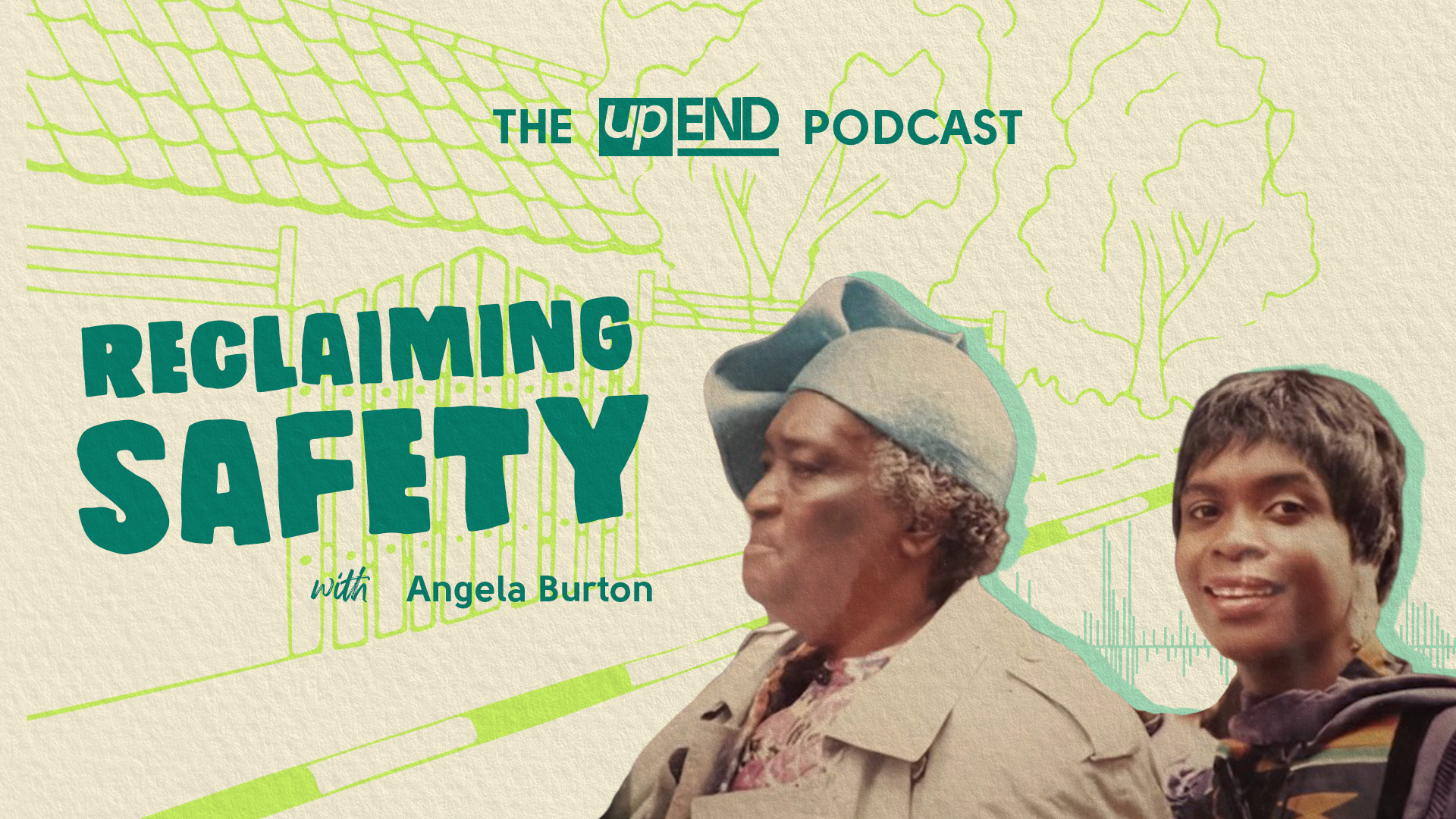
Okay, I love that. I know we’re trying to move forward because we’re still on question one and you know, we have so many things that we want to ask you, but I do want to take a moment to ask a question about your grandmother. Because I just think that that’s important to add, especially since she is important to you and you talk about history, your personal history and your family. So we asked you for a photo as we were preparing for this podcast episode and you sent us a photo of yourself and your grandmother. Can you tell us a bit about her and maybe how she influenced you and your work?
Angela Burton
Yeah, man, I’m getting teary eyed already. So my grandmother passed in 1992, a year after I graduated from law school. That was a big loss for me. My grandmother, missionary, evangelist, Flora Caroline Murray Burton, say her name, was just my saving grace. My mom had me when she was very young and as Black people do—and yes, other people do it as well—I was sent to live with my grandmother when I was about a year old or so. There’s a whole story behind how I got there. I was born in Huntington, New York in Long Island, where my mother was working as a live-in maid.
I came to find out years later before my mother passed away that at the time I was born, she was out in Huntington, Long Island, black woman, teenager basically, and the nurse tried to get her to sign away her rights to me so that I could be adopted. And she cussed them out. And it was like, no, absolutely not.
So I ended up with my grandmother in Mississippi and just a bevy of aunts who were my mother’s younger sisters. And that experience of growing up being raised by my grandmother in the village, she was a very religious woman. I lived in church. You know, in Pentecostal church, you go to church every day of the week for something. And that was part of the community, part of the village that she created for us.
By that time she’d already had nine children of her own. And so then I came in and I think she was just tired. So she basically just let me be myself and always encouraged me, always loved me, always protected me fiercely. We were like two peas in a pod. And she is a role model for me, like one of the strongest, most compassionate, kind and caring people I’ve ever known. And yeah, she’s just in my spirit, and I carry her with me all the time. So I really appreciate giving me the opportunity to just love on her memory right now. I appreciate that. Thank you.
Jaison Oliver
That’s making me think about my grandmothers, both of them passed away in the early 2000s. Both of them were fairly young mothers for my two parents. Like both of my parents are the first children of theirs, so very close relationships with my grandmothers. I miss both of them. One in Chicago, one in El Dorado, Arkansas. So, you know, in the Midwest and the South, but it just has me thinking about community and like safety, which takes us into the series, right?
This Reclaiming Safety series was really inspired by the “what about…” questions that we get so often when we say that we’re seeking to abolish the family policing system. Which is why we kind of started this conversation around the questions that have changed for you over time. So what is Reclaiming Safety about from your perspective, and why do you see this series of papers being necessary for people to engage with?
Angela Burton
The series is really a way to catalyze imagination. A way to get people off the dime of thinking that what we have is the only thing that we can have and what we should be doing is trying to fix that, right?
I was so excited when Alan Detloff approached me to help with, you know, soliciting authors and editing the series and getting it off the ground, because at that point in time, I was really, as I am now, wanting to think more creatively about how can we counteract what’s going on and really think about all the joyful and helpful ways that we come together as community and with relationship and resources that we already have, the things that people are already doing and lift those things up so that we can generate energy around, you know, life affirming actions and thoughts and energy, right?
We spent a lot of time over the last few years really highlighting the harms of the system, how it breaks people, how it destroys lives. And that was energy and it is still energy that is necessary to raise awareness and highlight the problems that we’re facing. And I was just so excited about this opportunity to engage with people around imagining something better and not just imagining something better but highlighting the ways that people are already doing the something better.
So the Reclaiming Safety series is framed around kind of addressing those questions that people ask to try to keep us where we are to maintain the status quo? Well, if we don’t have this, what’s going to happen to the children whose parents are disabled and mentally challenged, or use substances, or where children have been physically or sexually abused, which we know happens. Like if we don’t have this family policing system, what’s going to happen to them? And we know that there are answers to those questions.
And so the Reclaiming Safety series is about helping people to start to think more creatively about how we respond to situations of harm, as well as how we can put in place conditions and environments and connections and relationships that can actually counteract the possibility and minimize the risk of harm.
Jaison Oliver
And what are some snapshots of true safety and what that looks like from your perspective for children and families outside of the family policing system?
Angela Burton
Starting from the premise, of course, not just the premise, but the fact that we know that the vast majority of families that end up as cases in this system are people or families that are struggling with some sort of need or crisis or lack of resources. And so first off, obviously, is resources, right? Communities need resources. Housing, living wage, transportation, educational opportunities, and all the things that people who are affluent and have access to these resources have at their disposal. So let’s start there.
The billions of dollars that we’re using to police and regulate families, let’s start putting those resources in communities for things that we know that people generally speaking need, but also things that people want. Fun stuff, green spaces, well-resourced libraries that are open past six o’clock.
Jaison Oliver
What a concept.
Angela Burton
It’s quite a concept, right? And so that’s kind of where it starts. Then thinking about relationships and connections. I love the first essay by Professor Charisa Smith that talks about reclaiming safety for children of parents with disabilities. And talking about not only physical, but mental or emotional challenges that people face in today’s crazy world. We all do.
And this idea about creating pods, connections, the connectivity between having not only the parents, but the children involved in creating this network of people who understand what’s going on with that family, who can be trusted to respond at a moment’s notice if the child is seeing something. And also having the child be a part of that ecosystem and having their input about what it is they want, and how they want people to respond, and how they want people to show up for them if they are feeling some kind of way. So I thought that was just really a lovely, kind of creative and humane way of thinking about safety.
Jaison Oliver
Beautiful and doable, right?
Angela Burton
Completely doable. During COVID was the first time I heard about pods and things like, who are your people that you can always reach out to? And people were really being intentional and deliberate about these are my people who can check on me, and I check on them, et cetera, et cetera. And I was like, wow, that is really beautiful. Like why not?
Josie Pickens
Yeah, and I love the focus on imagining. That is my favorite part of the work as well. And even imagining and looking into the past, because this pod idea that you just explained sounds exactly like what existed in Meridian with you and your grandmother and the community that was there, right? And so in many ways, Black and brown folks have had to move and be futuristic when addressing some of the challenges and the harms that we have faced past, present, and possibly in the future.
And I also want to dig a little bit more into the past, talking about how in your introduction essay you highlighted that the family policing system is deeply rooted in racism and white supremacy. Can you speak to how the system specifically targets Black and brown families, why reforms cannot fully address this harm, and why abolition is the only way forward?
Angela Burton
So many other researchers and writers have written much more comprehensively and eloquently about the environment in which the family policing system, the formal system was enacted in 1974 through the Child Abuse Prevention and Treatment Act and what else was going on around that time in the United States with regard to retrenchment around civil rights, “tough on crime” and all these things that were starting to come out of the federal realm, into the states, and then down to the people. With regard to the way this industry, right, the commodification of Black and brown lives and bodies has been, is embedded in the way this country, United States of America, has operated from the very beginning.
And I love the way that Dorothy Roberts talks about after enslavement quote unquote officially ended, immediately Black children were then placed under the court system through these apprenticeships orders that put them right back into the same place that they were enslaved by calling their parents unfit to care for them, destitute. Because they did not have means to provide for their children because of the system and the industry, the way it was set up at that time. And it’s just become clearer and clearer over time that as applied to Black people in particular, and I’m going to speak from that perspective, that this system/industry is a is a perpetuation of the relationship between our government that we have been subjected to all these years and Black people in America as an identifiable group.
And that’s one of the reasons why when myself and Joyce McMillan and Shereen White from the Children’s Defense Fund and Hina Navid went to Geneva, Switzerland to the UN to call out this system and the UN committee to end racial discrimination acknowledged and recognized the connection between slavery, white supremacy, discrimination, and the current day family policing system. It’s historical, right? It’s fact, right? You can draw the through line from the transatlantic slave trade where children, mothers, fathers were separated and sold off to now. And the way we’re treated now is just another iteration of the same process in the same relationship of commodifying us.
When you get right down to it and you look at how our families are treated, regulated, policed, and sold, basically, our children are taken from us through a court system that then puts them with other people who they pay. Who makes money and leaves the families, the original families destitute after having been dragged through this whole system. Anyone who’s been through it as an impacted person can tell you all of the ways in which their lives were made worse, in which they were more impoverished, in which they lost homes, jobs, relationships, and are completely disconnected. Both parents and children. So yeah, when you really look at it and dig into the history it’s quite clear.
Josie Pickens
We hope you’re enjoying The upEND Podcast. A quick note: upEND is funded through the generosity of people like you who believe that ending the harm of the family policing system will help us to create a safer future. If you’re enjoying this podcast, we hope that you’ll consider donating to our work. Visit upendmovement.org/donate for more information.
Jaison Oliver
Yes, something that I think about often is how we talk about the system and like these systemic issues and people, I think somehow seem to get this idea that because we also talk about the system that we are ignoring the harm that actually occurs in families as opposed to really trying to find viable, workable, and effective solutions or interventions to address harm that’s occurring in our society and in our families, and not just making this distinction between ignoring the ways and not ignoring the ways that systemic harm and interpersonal or familial harm are related.
You had mentioned pods and started to talk about some of the ways that true safety can look like. How can communities respond to these instances of serious harm without relying on punitive systems such as the family policing system and traditional law enforcement?
Angela Burton
I think that’s a really complex question and process, right? Because first of all, we have to reclaim what we mean by safety. And I love the quote that we found from Mariame Kaba that safety cannot be found in these carceral systems that depend on punishment, but safety is not something that’s static either, that it changes over time. It’s contingent on resources and relationships, so even just starting to think about what safety is and what safety means is a starting point that is going to be difficult for a lot of people.
Because we’ve just been so propagandized to believe that safety is about police coming to respond to something that happened and doing their investigation and bringing the perpetrators to justice through the court system, and putting them in jail or separating perpetrators from the people that they’ve abused. And what we hear through this Reclaiming Safety series and the people who are writing about it and compiling the stories of people who actually have been harmed is that that’s not at all what they want. Yes, they want to have the abuse or the harm that is happening to them be stopped, but they don’t necessarily want to end all connection between themselves and even the perpetrator, certainly not themselves and the rest of their community. They want to still remain in a safe way with their ecosystem. I think that’s one thing that we have to really kind of hone in on is what it is we’re talking about when we talk about safety for children, right? And then what can community do.
Communities and groups and organizations and individuals are already doing the things. They’re already doing the things. My grandmother, going back to that, was a mother in the church and she was a beacon and a magnet for a lot of the young women in the church who would come to her and confide in her about things that may have been going on and happening in their lives. Whether it was at home or with a boyfriend, or this or that, she was a person that was held up as someone that you could go to for counsel, that you could go to who would intervene on your behalf. She was respected by other people in the community. And when she spoke privately with people, things happened, things changed, right? So that’s one thing, to really kind of lift up and highlight our elders. And that doesn’t necessarily mean somebody who’s old. You know, people who are wise, people who have that spirit and that energy, and really uplifting them and supporting them as people that we can go to.
Also, community groups and organizations, I love the way Josie and you guys at upEND are really kind of bringing people together to talk about and share what they are all doing, and what the connections are, and really expanding that community of resources for people who may reach out to one group who may not have the capacity to respond to whatever it is that they’re talking about. You can refer them to someone else.
I’m thinking about organizations like, of course, JMAC for Families and Joyce McMillan, who I work very closely with. She just collects diapers and gives them out to people. I’m thinking about people like Tanesha Grant in New York with Parents Supporting Parents. She somehow manages to get computers from somewhere and has these big block parties where she brings out all the people in the community that are providing services and resources and then she hands out these computers to the kids for school and things like that.
It’s not rocket science. I always come back to this. It’s not rocket science. It’s what we’re already doing. It’s what we’ve already been doing. The question then becomes, how do we replace that dynamic as the forefront, as the first response, as opposed to, CPS or calling the police. We would not be recreating anything, it’s just humanity. I like to say that it’s already being done. The real struggle right now is to get people out of the mindset of thinking that systems are the answer.
Jaison Oliver
Yeah, yeah.
Josie Pickens
Yeah, we call that carceral logic, right? I think that’s one of the things that we have to address as we’re moving towards becoming abolitionists is like that idea of firing the cop that lives inside of your head in order to address the way that we think, our visions of the world and what we think is possible.
Angela Burton
Listen. I have that cop in my head too. We all do. We’re swimming in it and it takes deliberate intentional energy shifting to move us out of that. That’s why this series about Reclaiming Safety is so exciting and so important to help people start to really shift their frame.
To be able to say, hey, you know what? If I am a social worker at a school and a kid is coming in consistently late, even though I’ve been told that that is a sign of potential child neglect and I should call CPS, maybe let me talk to that parent and see, because maybe there’s a transportation issue or maybe… think about other possibilities and go and find out before you pick up that phone.
And even if, and at some point you decide, this is out of my hands, this is before we’ve gotten rid of, you know, CPS, at least have that conversation with the parent and say, “My professional license, X, Y, and Z says that I have to call these people. This is what’s going to happen. Let’s have this conversation. Here’s a legal representation that you can reach out to when that happens,” et cetera, et cetera. Like we have to start thinking about different ways that we can, large and small, incremental and big and bold, start to disrupt and interrupt the way we think about safety, about protection, about care, about help.
Jaison Oliver
And you mentioned the Repeal CAPTA campaign. I want to just give you a chance to tell people like one, what is CAPTA for listeners who may not know and why do you feel like it’s important for that to be repealed?
Angela Burton
Yeah, this kind of goes back, Jaison, to something that you were saying earlier, on the one hand, it’s real people who are impacted and who live through these harms. And that’s so important for people who haven’t experienced this to understand what really happens, what the real impact is, what the consequences are for someone who makes that call to CPS.
And then there’s a whole other realm of legislative laws and money that goes into these systems that come through bills like the Child Abuse Prevention and Treatment Act of 1974. We call it CAPTA for short. And that’s a law that was enacted in 1974 that basically created CPS, the Child Protective Services System.
Jaison Oliver
So if we want to prevent and end child abuse, then we should be for it, right? Isn’t that how it works? It’s in the name of the law, so we should want it.
Angela Burton
Right, and that’s kind of the propaganda that comes along with something like that. Even the choice of the name, right? Child Abuse Prevention and Treatment. And we can go into some real detail about what each of those words means, but what it does is create this carceral system of reporting on the premise that parents are the most dangerous threat to children that there is out here. Not poverty, not poor educational system, not lack of housing, not any of these societal ills that are intentionally created through lack of resources and funding choices and all these things, but that parents are the biggest threat. And so we need a system to ensure that we can protect children. And so that’s what this law claims to have been enacted in order to do, to protect children. And it gives each state a little bit of money. And for that little bit of money, the state has to promise to maintain a system of reporting, which is called mandated reporting. In some states, everybody is a mandated reporter. In other states like New York, there’s a specific list of professionals that come into contact with children, like teachers and doctors and psychologists and all these things that are required by law, under penalties of losing their license or being criminally charged with reporting anything basically that they think might be child maltreatment.
Jaison Oliver
Yeah, and I wanted to flag this because this is one approach toward addressing what we may think of as serious harm. This is one group’s vision for how to do that. What are we missing from this vision that is presented through CAPTA and codified through CAPTA?
Angela Burton
Thank you for pointing that out in terms of a particular vision of what safety looks like and how we respond to harm or potential harm. And this vision came through a very deficiency type of vision, both that parents are dangerous and criminal, and also that many parents are defective in some way or form—mental illness, substance use, intellectually challenged, et cetera. These are the targets that are built into the way the system operates. And poor people. This is explicitly part of the vision of who is targeted by CAPTA and by this system. So the reporting is based on things that have to do with lack of resources.
We talked earlier about children, you know, missing a lot of days of school or you know people who have a mental illness or you know all these things right and then the other three parts of the bill is prosecution. The reporting triggers an investigation, which is by and large a criminal investigation.
And in fact, right now in New York City, there are lawsuits against the local CPS agency, the Administration for Children and Services, about how they go into people’s homes without a warrant based on anonymous calls to the system and just go ramshackle through people’s homes, looking in their closets, under the beds, medicine cabinet, strip searching children, interrogating their children without their permission. These are all constitutional violations that this agency, a government agency, has kind of gotten out of control.
These investigations can then lead to prosecution in court as well as temporary and permanent separation of children from their families. We call the permanent separation termination of parental rights. And it’s really a termination of children’s rights to their entire heritage, into their entire lineage.
And then there’s this whole big industry piece of “treatment”. Remember it’s Child Abuse Prevention and Treatment Act. That treatment goes back to the idea that parents are defective, dangerous, mentally ill, et cetera. And so there’s a whole industry of psychological evaluations, substance use testing, all these things that are reliant on an idea of parents as psychologically, psychiatrically harmful to their children. And there’s a lot of money in that as well.
Jaison Oliver
So what I’m hearing is that CAPTA is really pushing for this vision of addressing child abuse in a way that really just furthers and builds on the harm that people are experiencing. Not just children, but also families. Meanwhile, we have these essays which discuss this idea of transformative justice. So can you tell us a bit about the idea of transformative justice that comes up in some of the Reclaiming Safety essays? Just a basic idea of what it is and what that means for the upcoming episodes.
Angela Burton
Justice is a kind of ideal of how you kind of respond to injustice, right? And so transformative justice, from my understanding of really engaging with the essays and the people who wrote them and the way they talk about it, is a way to respond to harm that doesn’t first of all create more harm, which is what we have right now, but also works to maintain connections, maintain relationships, and actually generate more care. More concern that we’re not just throwing people away because they’ve done something bad and even egregious. That every human has value. And at the same time that we’re not throwing people away, we’re also creating atmospheres and environments so that people can respond in their own way, from their own sensibilities about what justice means to them. That is not something that is imposed, a one size fits all response to hurt and harm.
And that it also is a way or ways of being and knowing and relating that creates more care and concern going forward, right? So transforming human connections, I think. And when we talk about transformative, there’s a couple of different ways that I’m thinking about it as we were talking about it. It’s kind of going back to what we were saying earlier, transforming our mindset from the current carceral logics of how we respond to harm, but also transforming the relationships between people who are harmed and people who harm people. Yeah, that just kind of occurred to me as we were talking.
Josie Pickens
I love this conversation that we’re having around transformative justice and community pods and all of these things. Reclaiming Safety, this series, is about imagination, but it’s also about hope, right? So one of my favorite abolitionist thinkers and organizers, Mariame Kaba, teaches us that “hope is a discipline.” I quote this all the time. I say this to myself as an affirmation all the time. And that hope is an integral aspect of abolitionist visioning and work. So what makes you hopeful that communities can work to keep children and families safe outside of these punitive carceral systems?
Angela Burton
What makes me hopeful and what keeps me getting up every day and doing what I do is that that is happening. That is already happening. The energy is magnetizing, you know, it’s coming together. People are connecting. People are resisting. People are building. People are creating. People are imagining. And that makes me so hopeful because I already can see in small and large ways the shift.
The shift is shifting. Just the fact that we’re having this conversation, just the fact that we have this Reclaiming Safety series and that people are responding to it or reading it. Just the fact that there are these organizations and initiatives popping up all over the place and using social media and technology to connect with each other.
And the fact that the system is on the run. Right? They’re on the offense, or is it the defense?
Jaison Oliver
Mm-hmm a little bit of both a little bit of both, right? They’re changing their names. And they’re also attacking the people who are forcing them to change their names. Yep, it’s a little bit of both.
Josie Pickens
Yeah, that’s the best part.
Angela Burton
Yeah, yeah, yeah. All the things. And despite all of that, we’re still moving. The movement is moving. The energy is generating, and I just see change happening all over the place. Not only in conversation, but also in practice.
Josie Pickens
Yeah, co-opting language, all of that is happening.
Angela Burton
Whether it’s through legal representation and the people who are doing legal representation really stepping up and pushing back on laws and practices using their set skill sets. Whether it’s foster care agencies really taking a hard look at their complicity in the system and changing the way that they operate with community and in community. Those are just two examples that I’m seeing personally in the work that we’re doing in New York with the Narrowing the Front Door group and working with various constituencies throughout the city and the state and the receptiveness to these ideas of abolition. People are finally starting to get over their clutching-the-pearls when they hear the word abolition because now they’re starting to really understand what it’s about. That it’s a good thing. That it’s not just tearing down and leaving people willy-nilly to anarchy. It’s really about care and love and humanity.
Josie Pickens
And that all of that is possible, right? And like you said, we’re already doing all the things, already doing all the work. And in many ways, we always have been. One more question about hope, and then we’re going to wrap things up. We are so grateful for the way that you edited these papers and really shaped this series. What do you hope people will take away from the essays and this season of the podcast?
Angela Burton
I hope that people will take away the reality that we can do better. We are doing better. We have the power. It may take a while, but the first step is really shifting our mind frame. And I hope that people will use these essays as a catalyst for more conversation, as a catalyst for doing their own research. Maybe they’ll pull together a group of people to read through each of the essays and discuss how they can use them in their own roles, whatever that may be and really start making small changes, whether it’s in their language of how they speak about children, and safety, and harm, and protection, and care, and concern. Whether it’s trying to make changes within their organization that shrinks the footprint of this industry and shifts power into community, like all those things. I hope people really take it as a call to action.
Josie Pickens
Yeah, a battle cry of sorts, right?
Angela Burton
Yes, I love that. A battle cry.
Josie Pickens
I love that.
Jaison Oliver
And I’m going to put a call out to all the listeners who just heard Angela talking. If you put together a reading group for the Reclaiming Safety essays, let us know. Like we absolutely want to hear about it. You can feel free to tag us at up and movement on the socials. You can email us info at up and movement dot org. like let us know because we love to hear that people are engaging with the work and we will definitely pass that along to Angela.
But if people want to get connected with you directly Angela and learn more about you. Let them know how to connect with you in your work.
Angela Burton
I’m on LinkedIn under my name Angela Burton. I think it might be Angela Olivia Burton. I’m on Instagram @SankofaRose. And I used to be on X but I’m not anymore. Or you can reach out to Josie or Jason and they will give you my email address.
Josie Pickens
We will, we certainly will do that. Oh, it’s been such a pleasure, Angela. I always enjoy being in conversation with you. So grateful for all of the work that you’re doing with this series and for being our guest today on the podcast.
Jaison Oliver
Absolutely. This is a wonderful start to the season. Thank you.
Angela Burton
Thank you, I appreciate you both.